

Human Connection and Resilience
Free Relationship-Building Resource for Educators

Practical Strategies for Building Stronger Teacher-Student Relationships
As a companion resource to the book, this free guide gives educators 20 practical K–12 strategies for helping students feel seen, valued, empowered, and included as partners in the classroom.
Relationships Matter. Intentionality Makes Them Stronger.
Every student enters school carrying a unique story. Some arrive ready to learn. Others arrive carrying anxiety, discouragement, trauma, loneliness, academic frustration, conflict, or the belief that school is simply a place where they do not belong.
Most educators do not need to be convinced that relationships matter. They see it every day. Students work harder, persist longer, and take greater risks when they believe an adult genuinely cares about them.
The challenge is not caring.
The challenge is becoming more intentional about helping students experience that care.
That is the heart of Surrendering the One-Up Relationship.
a demo with a Program Director and we will send you a free copy (ebook and audio version) of our best-selling book, “The Resilience Breakthrough,” by Christian Moore.
What Does It Mean to Surrender the One-Up?
Surrendering the One-Up does not mean lowering expectations, giving up authority, or eliminating structure. Students still need adults who provide clarity, accountability, safety, and support.
Instead, it means becoming more intentional about how we use our authority.
There are moments throughout the school day when educators can create more space for student voice, choice, ownership, dignity, and partnership. Sometimes that means asking before assuming. Sometimes it means listening before correcting. Sometimes it means allowing students to contribute to the classroom community rather than simply comply with it.
When students feel seen, valued, empowered, and included as partners, they often begin to experience school differently.
And when students feel different, they often respond differently.
Download the Free Educator Resource
Surrendering the One-Up Workshop Edition is a practical guide designed to help educators build stronger relationships with students through intentional actions they can use right away.
Inside the guide, you will find 20 practical strategies for K–12 classrooms, organized around four simple messages students need to experience:
See Me
“You notice me. You know who I am. You are interested in understanding my story.”
Value Me
“My worth is not determined by my behavior, grades, mistakes, or success.”
Empower Me
“My ideas matter. I can make choices, contribute, lead, and take responsibility.”
Partner With Me
“We are building this classroom, learning experience, and community together.”
These strategies are designed to help educators create more intentional moments of connection, belonging, voice, and shared ownership.
The Transformational Leader Toolkit
This toolkit is a series of pre-built staff development workshops for school administrators and school leadership teams to build staff capacity for creating positive teacher-student relationships. This has the potential to directly address the lack of connectedness we are seeing in students, as well as the teacher burnout and staffing shortages we are seeing across our schools. Point people to this page for more information: whytry.org/transformational
Pass Along a Printable Brochure
Just looking for a quick document that can be attached to an email or a brochure that can be printed. Click on this link to get a document that explains about all our programs and resources for educators. Download a Brochure
The Gap Educators Are Facing
Educators are being asked to do more than ever.
They are supporting students with complex academic, emotional, behavioral, and social needs. They are navigating classroom disruption, disengagement, chronic absenteeism, mental health concerns, staff burnout, and school culture challenges that cannot be solved by curriculum alone.
At the same time, many educators are stretched thin. Even when relationships are one of their highest priorities, the demands of the day can make it difficult to build them with consistency and intention.
That creates a gap.
The goal: Students feel connected, valued, motivated, and ready to engage.
The reality: Many students feel disconnected, discouraged, unseen, or powerless at school.
The opportunity: Equip educators with practical tools that help them build relationships intentionally, not accidentally.
That is where WhyTry can help.
Keep the Conversation Going With Your Staff
The free resource is a starting point. It gives educators practical strategies they can use immediately.
But many schools need more than a handout. They need a shared language, engaging professional development, and tools that help staff build capacity together.
WhyTry’s professional development resources and workshops help educators explore practical ways to build resilience, strengthen relationships, increase student engagement, and improve school culture.
Through the WhyTry Program and the Transformational Leader Toolkit, schools can support staff in addressing some of the most important challenges educators are facing today, including:
Building positive teacher-student relationships
Strengthening school culture and belonging
Increasing student engagement and motivation
Supporting resilience in students and staff
Reducing power struggles through student voice and ownership
Helping educators respond to behavior through connection, dignity, and accountability
Creating professional development that is practical, engaging, and easy to apply
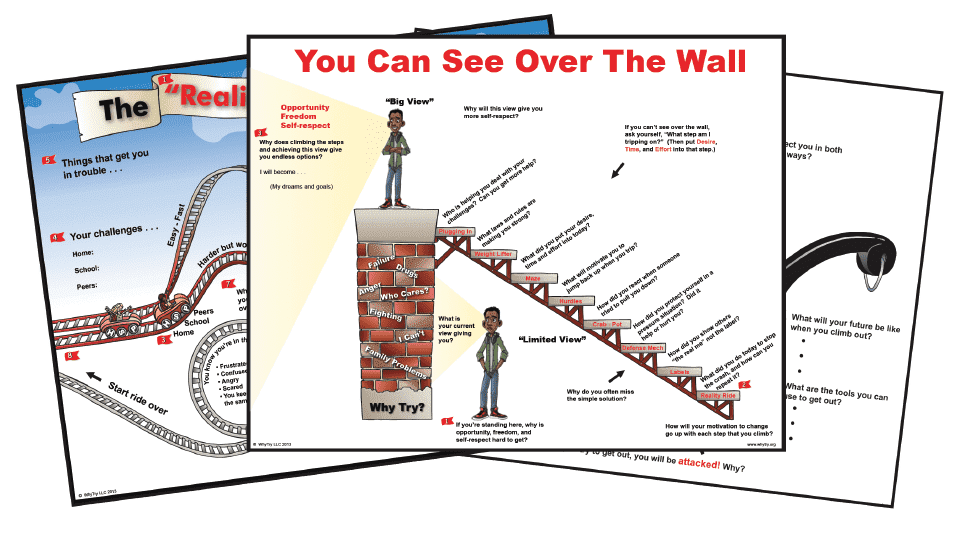
10 WhyTry Learning Units
The WhyTry curriculum utilizes a series of
ten visual analogies that teach essential
life skills including:
- Decision-making
- Positive self-esteem
- Emotional regulation
- Having a resilient mindset
- Peer influence & relationships
- Problem-solving
- Hard work & Determination
- Responsibility and expectations
- Relationship building
- Self-efficacy
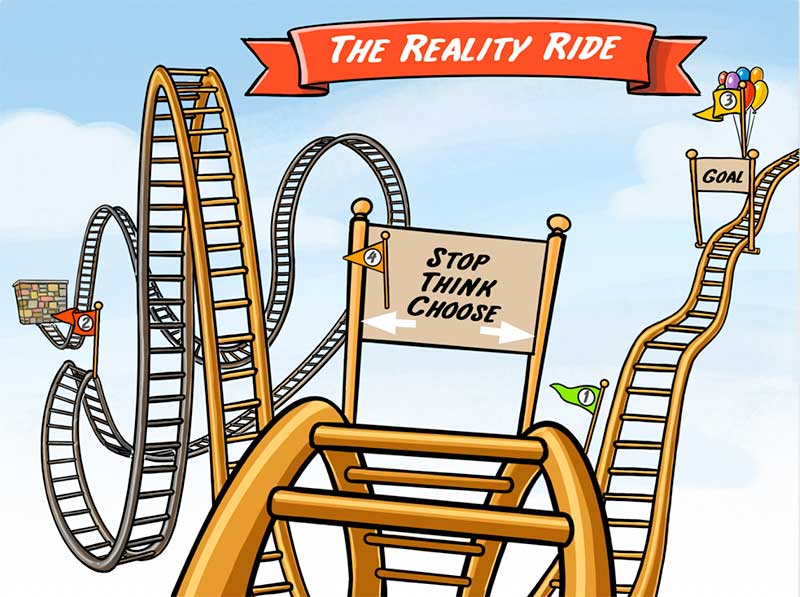
The Power of Visual Metaphors
One of the most unique things about WhyTry is how we use visual metaphors to teach these important principles to students in a way they can understand and remember. The powerful thing about using this visual approach is the way it takes abstract concepts and puts them into a context through the use of a metaphor that students can understand. It essentially creates a language for educators to communicate the relevance of these things.