

Episode 007: Hasan Davis
Harnessing the Wind
Listen to the Episode Here:
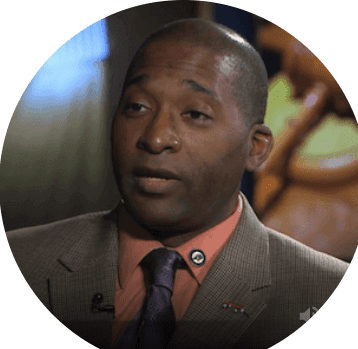
Hasan Davis knows about hope. It’s the only thing that kept him going through the loss of his cousin, as a soldier, and as the Commissioner of Juvenile Justice for the State of Kentucky.
Are you at risk? CALL 1-800-273-TALK
Episode Transcript:
Christian Moore:
Welcome to the Resilience Breakthrough podcast. This is Christian Moore.
Dave Biesinger:
And I’m Dave Biesinger, and this is episode seven, and right before the episode, we got some pretty hard news. Last night, we actually lost the coauthor of the Resilience Breakthrough book, Brad Anderson.
Christian Moore:
Yeah, my heart is struggling right now. Dave, I have decided to do the podcast as a tribute to Brad. Brad really dedicated the last, let’s say, 15 years of his life, really, to trying to help people who are dealing with chronic depression and anxiety. An incredible human being who led with his heart, and he had treated me like gold. One of the reasons I’ve learned the last two years, both my parents have passed away, and I was out on the road when my parents passed away. We all cope with that different. For me, I just continued to move forward and tried to be their voice, be their … when their hands aren’t here, when their voice isn’t here, when they’re not here physically, I think it’s important to pay tribute to them.
Dave Biesinger:
The guest that we have on today, Hasan Davis, he’s a special man. He’s got some stories to tell.
Hasan Davis:
Do you all remember that song by Bill Withers, Lean On Me? You know how it goes. “Sometimes in our lives, we all have pain, we all have sorrow. But if we are wise, we know that there’s always tomorrow.” Anyway, that was the song on the radio the day I got the news. See, I was at home by myself, had the radio turned up kind of loud, and I guess I was trying to sing when the phone rang. “Hello?” I said. Nobody answered. “Hello?” I said a bit louder. This voice started screaming, “He’s dead! He’s dead! They killed Bebe!” And the whole world started spinning, me trying to sit before I fall, this voice is echoing through my soul. “They killed Bebe.” And Bill was on the radio singing, “Call me when you need a friend.”
Hasan Davis:
See, Bebe was my cousin, Cedric, about the same age as my youngest brother Tony, and he was dead. He was the first of my generation go to out like that. He wasn’t the last, and he wasn’t the youngest. He just got to be first. Bebe was a father at 16. He used to run the streets. We all used to run the streets, but he knew how to laugh at his self. And you’ve got to know how to laugh at yourself if you hope to survive those St. Louis streets.
Hasan Davis:
So, I go home for the funeral, and the boy who killed my cousin is already out of jail. That’s when me and mine start talking like it’s time to go play. You know, it’s time to go play judge, and time to go play jury. It is time to go play executioner, and that’s when it hits me that this is what it’s all about. Letting your emotions drag you to the edge of sanity, holding on so tight and so long to the madness that it eats you from the inside, and it builds and it builds, and bam!
Hasan Davis:
And somewhere, another baby sits staring at a door that she don’t know will never open again. And somewhere, another mother sits cradling a phone that she knows will never ring again. And somewhere, a whole family, a whole community is changed forever, again, and that is not how I want to make it to the other side.
Hasan Davis:
So, I start trying really hard to not let other people push my buttons and make me do things. But sometimes, sometimes I still get so mad I can’t even see straight. And then that song will pop into the back of my head, and sometimes I pick up my phone and I push the little star button. I say, “Hello?” You know, I’m talking to the other side. I say, “I miss you, Bebe.” I say, “I miss you, Steve-o.” I say, “I miss you, and I will never forget you, and thanks for listening, and I wish, I wish … I wish that I could return the favor. But I will talk to you again soon, so just keep watching our back. Peace.”
Hasan Davis:
Now, the whole time, see, it’s that song. It never stops playing in the back of my head. “I’m right up the road, and I’ll share your load if you just call me. Call me.” See, I remember that song, because now that’s Bebe’s song.
Dave Biesinger:
Thank you for sharing that. So, you’ve seen some of the dark places of this world, but you have not let it drag you down into the darkness. You’ve decided instead to shine a light in those corners. What made you want to do that?
Hasan Davis:
I think that it took me a while to realize as a young person that I had a choice to make. When I got picked up from the police station the first time, I was 11 years old, and there was a lot of drama involved in that, but at the end of that day, I remember my father, my stepfather who raised me, sat me down, and we had a long conversation, and at the end of it he said, “Son, maybe it’s time for you to stop trying to figure out what it is you’re willing to die for, and see if there’s something you want to live for.”
Hasan Davis:
And it was a pivotal moment for me, because one, I didn’t realize I had a choice, right? As a young person, experiencing what so many young folks do with loss and hopelessness and systems that don’t work for you, I didn’t know that there was something other than going out in a blaze of glory, right? And so that kind of set me on the course, and over the years of my mother picking me up from the police, instead of cursing me out and sending me away, she gave me that conversation. “If you could see what I see every time I look at you, you would know how great you already were.” And I was like, what are these people looking at?
Hasan Davis:
Those moments gave me the courage to start saying, if they can see it, these people who don’t owe me anything … I mean, she feeds me. She brought me into the world. She’s kept me alive, but she doesn’t owe me. But she can look at me, and when she looks at me, she sees something that the whole rest of the world doesn’t. And I want that. And so, as a young person, that became my guidance, my North Star. I wanted to become the person my mother believes the world deserves.
Hasan Davis:
And so, over all those difficult times, every time I fell down, I would look in the mirror, say, “Not yet. It’s time for you to get up and get back out there.” And that motivation, having that, I call them hope dealers. Having that hope dealer, she’s hope dealer number one, HD1, but having those folks that unconditionally cared about me. She didn’t support my bad choices and forgive me, but she let me know that there was always going to be someone there, even when I was on the ground, right there beside me, helping me if I chose to be courageous enough to stand up again, figure out what the next step would be.
Hasan Davis:
So, that was what really influenced me early, and as I transitioned through all of these systems, that guidance from her and other hope dealers in my life kind of helped me frame out what I wanted to live for. I wanted to live to be an example of what perseverance and resistance look like.
Christian Moore:
I tell you what, Hasan. This is Christian. You are definitely one of the greatest hope dealers I’ve ever met, and I wish I would have had the chance to meet your mom. Is your mom still alive, Hasan?
Hasan Davis:
She is.
Christian Moore:
So, she saw your success, and to make it to the top of the mountain.
Hasan Davis:
Yes. That’s been the beautiful reward for me, and for her, to be able to show her that she wasn’t wrong all them years ago, when everybody else was like, “Girl, you need to go ahead and cut that one loose.”
Dave Biesinger:
I love that, first off, I love that you believed what your mom had to say. I think, we have a lot of people that tell us a lot of different stories about ourselves, and you chose to believe a story of light instead of a story of darkness, so kudos to you, kudos to your mom. And then, kudos for you for turning around and trying to share that story of who people can be with some … I don’t know. The juvenile justice system’s complicated to talk about. If I have this correct, you were, was it the superintendent of Juvenile Justice for the state of Kentucky?
Hasan Davis:
Commissioner. I’m commissioner of the Kentucky Department of Juvenile Justice.
Dave Biesinger:
Okay, the commissioner. This is a place where people go who are going to have very few options moving forward. The statistics do not look good for people who enter the juvenile justice system, for them ever breakout of that system for their entire lives, right?
Hasan Davis:
Yeah. And I think the challenge for me, Dave, was knowing that and stepping into it. I had been an advisor and an advocate for youth for years before I stepped into this role, and looking at the data, and talking about disproportionality of youth of color and poor kids and kids with disabilities like us. And so, being the guy pointing the finger all the time at what was wrong with the system was one thing, but then when all of the sudden someone said, “Okay, put your money where your mouth is. Step up and do something.”
Hasan Davis:
At first I felt really bizarre, right? I felt like I was becoming the Man, right? I’ve been fighting the Man my whole life.
Dave Biesinger:
And you became the Man.
Hasan Davis:
Apparently, I was about to walk into the corner office, right, run the $100 million organization with 1300 employees, operating 36 facilities. But this is what struck me: If I could get into a system and I could start to shift the culture and the conversation about what happens in the systems, then maybe there is a way for there to be a different result. But you’re right, the data is really clear. Young people that cross the threshold of a secure juvenile facility immediately have their prospects drop. Their chances of graduation, their chances of gainful employment, all of those things. But they don’t have to be that way.
Hasan Davis:
But the biggest piece is, we have more young people in the system than we ought to have, and I think that it’s been clear with this COVID-19 experience, as we start to navigate and remove young people, that there are a lot of them there that shouldn’t be there. And I’ll be really clear, I had this conversation with a judge once, and I was like, “The truth, Judge, is most of the kids you lock up are kids who pissed you off. Not kids who did bad things. They’re not kids we’re afraid of. They’re kids we’re mad at.”
Hasan Davis:
And so, if we can figure out how to divest ourselves of hurt feelings, because kids act like young people in crisis, and really start to manage them and give them support, like counselors and mentors, then I think we could shift it. I’ve seen it. We had a substantial bill passed here right before I resigned my commission to the governor. My only mission was to get this bill passed, and Senate Bill 200 in Kentucky dramatically transformed the work.
Hasan Davis:
And that’s what we have to do. We can’t eliminate these systems, at least not in this time, but I think that we can make sure that the contact with young people are limited, specific, and direct, which means that they’re there for a reason, and our job is to figure out how to make them better because of that experience, and to get them back home with supports as fast as possible.
Dave Biesinger:
Can you share just a little bit more about that bill? I think our listeners would be curious how that bill changed things.
Hasan Davis:
Yeah. Senate Bill 200, we got it into effect. It isn’t a perfect fix, but it was a great start. We put limits on the amount of time a young person can be locked up for an offense. We used to have what’s called indeterminate sentencing, and it sounded really good way back in the old days of juvenile justice, because children were different than adults, that we didn’t sentence them. They’re supposed to stay with juvenile justice until things get better for them. But what it became was, they stay with juvenile justice usually until they turned 18. So, a young person could go in at 13 years old. Maybe they stole a candy bar. Maybe they got into a fight at school for some reason that wasn’t a great reason.
Dave Biesinger:
And what kind of life preparation is that?
Hasan Davis:
Right.
Dave Biesinger:
You know what’s so interesting about this whole conversation, I was thinking about this the other day, and I was just thinking about a chance to come talk to you again. Here’s the thing, an organization acts to achieve whatever metric it’s held accountable for, right?
Hasan Davis:
Accountable for the result.
Dave Biesinger:
You’re telling me, these are the metrics you’re holding me accountable for? Well, fine then, I’m going to roll out policies that make sure those metrics are met. And if the metrics that we’re asking juvenile justice is basically keep these people away from society, then there should be no surprise. But what about when they become adults? We can’t just warehouse people. People are not couches. They’re not meant to be warehoused for their entire lives. They’re not meant to be left somewhere, forgotten about.
Christian Moore:
Yeah, we’re doing it more than any other industrialize nation. I’m hoping, one of the things that I speak out a lot about, and I’d be curious to hear your view on it, Hasan, is especially with children, I realize believe, unless it’s a pretty intense violent crime, I’d rather see children get access to resources, again, what you were saying, more mental health services. They need those relationships, those support systems, so, so much. And I could see, if it’s a violent crime, they’re a real danger to other people and stuff, I get that, but I see so many kids. It’s as high as 70% of these kids have learning differences, learning disabilities, and we’re locking these children up. I think, in a society as educated as we are, have the resources we have, I think that that’s a crime. That’s got to stop. And it’s very, very frustrating.
Hasan Davis:
And a society that thinks they’re as good as we think we are, right? We think that we are a great society, and the thing is, if you want to look at the real value of the community, go into the prisons and the juvenile centers. That’s when you know how much we value human life. But to your point, Dave, one of the things that really struck me when I was commissioner was exactly that: the mission, right? What is the outcome expected? And so I had a result that was my result. Every Kentucky child safe, supported, and provided a clear path to personal greatness in education, career, and community life.
Hasan Davis:
And so, when I said that out loud, people were like, we’re the Department of Juvenile Justice. What are you talking about? And the conversation … all of the work I did was create all kinds of system disrupting, right, because it really was changing the operating system of the agency. But the idea was, I kept saying, we are a child-serving system with a justice component, not a justice or a criminal system with a child-serving component. And once you switch that, once you switch the values statement to the children and not to the corrections, then you have a model to work with. Our work should be child-centered, family-focused, community-based, trauma-informed, and hope-driven.
Christian Moore:
Amen, amen, amen!
Dave Biesinger:
I love that.
Hasan Davis:
And so, that was the challenge, because all of those statements together were completely the opposite of what people expect of a corrections system, there became this conflict, that this isn’t your job. And my argument was always, absolutely it’s my job, because in order to keep you safe, I know that these children have to be well-educated, trained to a job, and have the ability to navigate community systems, because if you don’t give them that, then they’re going to come back and take all the stuff that you give.
Hasan Davis:
And so, this debate about why should we give the bad kids art? Why should you give the bad kids therapy and multi-systemic support when my kids don’t get that? I said, I told a senator once, I said, “Sir, I don’t think your kid is going to break into your house and do damage to you if we don’t do something about it, because you’ve already got all those fail safes in place. So, how about we focus on the ones that need it?” This is where equity comes in.
Christian Moore:
Absolutely.
Hasan Davis:
It’s not about every child gets the same thing. It’s every child gets what they need, and that’s the conversation that we have to continue to push. It’s so hard to have, but it makes so much sense.
Christian Moore:
Emphasis on society. If every child gets what they need, our whole society is improved.
Hasan Davis:
Yes.
Dave Biesinger:
And what breaks my heart about many of these kids in particular, Hasan, is oftentimes, I know because I knew some of these kids when I was younger, kids like this. They’re smart. They’re enterprising. They think outside of the box. I mean, these are business owners, given a different set of life circumstances. These are innovators. These are geniuses, just given somebody to tell them, like you had your mom tell you, you can have a different pathway. If they just have somebody, some shred of hope, some ray of light to hang on to, these are some of our best and brightest minds.
Christian Moore:
Hey, Hasan, you’re one of the best people I’ve ever heard break down hope. I’ve been studying hope for a lot of years. Maybe share, I think you have those W’s of hope and stuff. Share some feelings on hope. I love hearing you talk about hope.
Hasan Davis:
Sure. I think hope, the construct of it has three really strong components, right? The way to better, the want to better, and the will to better. The way, the want, and the will. And a lot of it is how we shape them. Our ability as hope dealers is a part of that, but young people have to believe that there’s a different world out there that they can access, and we have to give them a lens into that, even in the difficult times, show them possibilities and create spaces where they can see and maybe even practice some of those things, yeah, I could be this person, instead of that person.
Hasan Davis:
And the will, actually helping them reframe their experience and their lives in a way to believe that they deserve something different, right? To be worthy of a second chance, or in my case, a fifth chance, and to be able to stand up and say, yeah, I know I got expelled from alternative school, and I was aggressive, and I’m ADHD and dyslexic, and I’ve lived in 13 homes and gone to five different schools in the last 10 years. But I’m going to go to college, because I’ve got people who told me I was college material.
Hasan Davis:
And people say, that’s just false hope. That’s the piece that really gets me. There’s a difference between being hopeful and being told a lie, and the idea of hope is not just that you have a wish out there of something amazing happens. It’s having a belief in something amazing happening and then having the courage to do the work necessary to make that belief real.
Dave Biesinger:
Yeah, I love that.
Hasan Davis:
And that should be provided in the support systems, so they can actually undergird that big dream of theirs with the actions it takes to make it happen. So, it’s belief plus action, not just great belief. And so, we get caught up. I actually have a teacher I was working, this long-term residency with a group of young men who were in detention, they were locked up. And we were having this great session. I do this process called the Bio Poem, and we start to really engage in future-forward thinking. And she was like, “It’s amazing. I’m now seeing these guys so lit up and powerful and positive about what they’re going to be in the world.” This was after they left. She said, “But do you think it’s fair, Mr. Davis?”
Hasan Davis:
I was like, “What do you mean?” She said, “You know, do you think it’s fair having them talk about all these great things that they want to accomplish in the world?” And she got real quiet. “You know these kids ain’t going to be nothing. You know they’re all pretty much going to be just locked up for the rest of their lives. Do you think it’s fair to give them false hope?”
Hasan Davis:
And that sent me into a head spin. I was like, whoa, wait a minute, I can’t be doing that. And so, I went home depressed, instead of excited about the day I had with these young men. And so, I took a deep breath and got myself together and went back to my legal thinking, my legal mindset. I said, all right, I’m going to process this out, so I got out my dictionary and I looked up the word false. “Untrue, unable to be true, a lie.” Not a good start, but it is what it is. All right. And then I looked up hope, and I found a definition that said “A reliance or belief in future possibility.” And so, false hope is telling someone a lie about their future possibility, and I was like, that sucks.
Hasan Davis:
But then I stopped, and it took me a while, and over that night I processed it, and this is what I came up with: Hope is what I call a future-lying statement. Based on those definitions, it is something that is projected out in front of us, so it cannot be proven true or false right now. It can only be waiting –
Dave Biesinger:
It’s potential. Right, it’s just potential.
Hasan Davis:
Right, it’s present or it’s active.
Dave Biesinger:
I mean, I hate to get metaphysical here, but have you ever heard in quantum physics how before the point of observation, something can be either a particle or a wave? It’s like, we haven’t made the observation yet. We don’t know what it is. We don’t know if it’s a particle or a wave. Maybe that’s a little too deep. But I mean, that’s a truth about the physical world, the reality that is around us. We do not know until that future moment comes, and then we make the observation.
Hasan Davis:
Yes, and so by definition, there’s actually no such thing as false hope. Either hope is present and waiting to be found, or it’s absent. If it’s absent, it means that we have not planted the seeds. If it’s present, it means the seeds haven’t grown yet. And so, false hope is actually the lie in and of itself. Now, we can lie to people and just say, “Oh yeah, Timmy, you can’t read past third grade, but I think you can be an astrophysicist.” Now, that is a lie, without the kind of support to say, “Timmy, I’m going to put you in these classes, I’m going to get you some remediation, and I’ve got these readers that we’re going to start to go through step-by-step, and at the end of a year, you’re going to see improvement in your reading, and I want you to decide then, if you still think astrophysics is the way you want to go, because if you do, then we’ve got a next step we’ve got to get to to get to that next part.” We’re building steps towards a dream.
Hasan Davis:
I think that’s where I wound up. I kept telling myself, this story, and it was a story that I told myself every time I got expelled from college and went home with my tail between my legs to the streets. I kept saying, this is who I am. My mama told me that I was better than this, and that was the thing that made me turn around and say, you know what, I’m not going out tonight with a machine gun. I’m not going out tonight. Actually, I wound up joining the army. I just got on the bus one day, and I wrote my mother a note from Fort Knox, Kentucky: “Dear Mom, I’m joining the army. I had to make a decision today, so I did. I’ll see you when these people let me out.” But I had to do something to preserve the hope that I had to be something else. And sometimes it takes hard choices.
Christian Moore:
Yeah, I think one of the lifeblood of hope is action, like when you wrote that letter to your mom saying, all right, I’m joining the army. That was an action, and I think the action kicks in, and then motivation shows up, then hope shows up. So, you put the hope down there in the future, but you have to have the motivation to head in that direction, and then to just even get that started. I guess even the faith comes out of the action, so you start the action. I want to pay tribute here to Brad Anderson. He was one of the only people who told me that our book would be nationally published. Everybody else was like, “No, you’ll probably have to self-publish. You won’t be able to get the Resilience Breakthrough …”
Christian Moore:
And then I just watched him. He put himself into intense action, and then as we started doing the work, we started doing the action, the motivation showed up, and then when we saw the results a little bit, we had more faith in it. And then on the back end of that, the hope started coming, because it was like, this is quality stuff, maybe we can get this published. And I remember, even Brad was saying, “We might have to go to a lot of different publishers.” By the time we finished the book four years later, there was enough action, there was enough hope, there was enough belief. Then that quality showed up and everything came together.
Christian Moore:
I guess I’m just saying, that lifeblood of being willing to walk towards hope starts with action. I look at your life, Hasan, and man, you talk about a guy who takes action and is willing to put himself into the fire to help these kids, it is definitely you.
Hasan Davis:
Yeah. I think it starts with some real intentional work on the part of all of us who are working for and with youth and young people, and we’re going to have to be building new systems of connection. I’m talking to a group of young people in Vermont tomorrow who are all young people with disabilities. They had a big conference I was supposed to be speaking at, but now we’re going to do it online. But connecting them and giving them tools to really engage and to process where they are personally, but then tools that they can use to step out into the world. And I think we’re going to have to be much more intentional about that. Very often, we have programs and work that does that, but in the age of COVID and self-isolation, we’re going to have to be very intentional about building communities.
Hasan Davis:
Now, the good thing is, most of these young people are better at computers and tech and phones than any of us will ever be. I’m still trying to figure out how to make Skype work. But they’ve got a pretty complex social network, but they’ve never used it for relationship-building. They’ve used it for communication and conversation. But I think, figuring out how we use these to build communities and places where they can have relationships and support systems as they continue to navigate, until we get them back to where we can all be in the same room seeing each other and hearing each other’s voices is going to be a pretty pivotal part of that, staying connected and staying engaged in our heads, in a way that doesn’t isolate us and leave us prone to our worst demons and our worst days.
Christian Moore:
I love you keep using, intention. It’s been interesting. Someone who travels all the time, I’ve walked by thousands of people in the airport, of course. I notice very few of them, when you’re just moving past so many people. And when I’m walking down the sidewalk now, and I just see two or three people, I’m going out of my way to try and have that intention, engage with them, wave at them, and not just walk by another human being. I’m 50 years old. I’ve walked past too many people because I didn’t have intention. Now, I understand, we’re only human, we can’t engage with everybody in emotional intimacy. But I know going forward, and just having this conversation with you and seeing and knowing a lot of the pain Brad was going through. My buddy Brad would often tell me he felt invisible, and there’s no worse feeling than to feel invisible. And some of that can just be mental health stuff, I understand, but to be seen, to be heard, is such a human need, and I appreciate you pointing out that intention.
Christian Moore:
I’m going to work towards that when I’m walking by people, and there really is no stranger in this world. Who’s the stranger? We’re all, I see far more similarities in us than differences, and I think part of that intention is having an attitude of there is no stranger.
Dave Biesinger:
Well, that’s right, and we don’t realize what’s going on behind the eyes of another human being. We just think sometimes we’re the only one who are hurting, or everyone else has just got it all pulled together. You know, social media contributes to that, everyone just curating the best moments of their life. We all interpret that as that’s what’s happening every day. But I think it’s interesting. There’s a bit of a backlash against that where people like to see things that are raw and a little more vulnerable, and aren’t painted up to look like a pretty picture. And Christian, I thought what you said just now was beautiful. I think we should all resolve to not let another human being walk by. What if just a smile and a hello could pull them out of a downward spiral they were in? A small action like that can have a huge consequence.
Dave Biesinger:
So, I want to go back real quick here to something you guys were talking about a minute ago. I can’t get it out of my head. It really stuck with me. What you guys were talking about with this hope action … it’s like, this hope, motivation, action, and then hope. It’s like this cycle. I want to make sure I’m understanding this right. It seems like it’s almost this upward spiral. In my life, I’ve been waiting for motivation to show up before I do things. I’m like, I’m not feeling up to it today, so I’m going to wait until I feel motivated to do that. But that’s not how things work. If I wait for that, and I’ve been in this situation, I’ll be waiting for the rest of my life for that motivation to show up. It doesn’t ever show up. There’s no special day that it arrives, when suddenly it’s like, I’m motivated.
Dave Biesinger:
Gosh, I can’t take this for granted. Sometimes we get this little glimmer of hope into a vision of the future. It’s like you talked about, Hasan. There’s this seed that’s planted in our minds. It’s precious. It does not come every day. Every once in a while, we get these little seeds planted of a future that we could have. We have to nurture that, because it is precious. When that seed of hope comes, we have to immediately take action, whether we feel like it or not. Motivation starts to show up as we take action.
Dave Biesinger:
As we take action, we start to fulfill that promise that we have, and then hope, it’s like the light shines brighter and brighter, and then it’s this upward spiral. We can just kick off this upward spiral of hope and motivation and action. I’ve found, at times, a month goes by and I’m a totally different person.
Hasan Davis:
Focus on action is such a huge part of this. People want different lives every day. There’s so much to want out there, but to act on it is the only way to guarantee the possibility. Now, it’s just a possibility, right? You still may wake up tomorrow in the same place, but if you don’t act, we know where you’re going to be. There’s not a question. And so, when you start processing how you get to the next piece, is you have to be moving.
Hasan Davis:
There was this thing that happened, when I was in alternative school, one of the administrators took us out on his boat once, and I’d never been on a sailing boat. And so, he was like, “We’re going to throw up the sails, we’re going to go north across the lake.” We threw up the sails, and we started going west, and I said, “Hey, wait, you’re messing up. We’re going …” He’s like, “No. What happens, Hasan, is you throw the sails up and they catch the wind. Once you catch the wind, you can make it take you wherever you want to go.”
Dave Biesinger:
Oh, wow.
Hasan Davis:
That blew my mind. I was like … And that was it. Once you get moving, the momentum, then you get control, not the other way around, right? I was like, whoa! But that really made it out for me. That was what it was.
Dave Biesinger:
I don’t know, some people believe in an after life and some people don’t. Wherever we all fall on that spectrum, I think sometimes as a human being, whether you’re a Christian, a Muslim, an atheist, sometimes it does feel like things are happening in your life, like there are forces in your life that are bigger than you, and it’s an awesome feeling. It feels like you’re riding that wind. It’s like, the force of destiny feels like it’s taking me somewhere, and it wasn’t exactly where I thought I was going, but it is, because I didn’t know where I really wanted to go. I’ve felt that before, and that’s a beautiful feeling, no matter what belief system you have, or no belief system at all.
Christian Moore:
Yeah, just keep moving. Keep moving. It’s a lot, during the COVID, I’ve told my kids, my kids are like, “Dad, you’re working harder right now. Everybody else is, a lot of people are relaxing. What’s wrong with you?” And I told my kids, I said, to overcome a lot of things I’ve had to overcome in my life, I’ve had to keep moving. I had to keep moving. I remember, just even in my neighborhood as a child, we’d walk around with our boombox during the late ’80s, but we just kept moving, and my friends would be like, “Man, Christian, all you want to do is walk. You want to keep going.” And that definitely has been a theme in my life.
Christian Moore:
Just a few minutes ago, for the first time in this podcast, my wife called me just literally three minutes before we were going on the air here, telling me about Brad, and she was like, “You’ve got to cancel.” I said, my heart, my emotions tell me to do that, but one, I know Brad would want us to get this message out, and to talk about these things, to talk about hope and what causes us to fight that fight. And we also need to show respect to people who get to that point where they cannot fight that fight for whatever reason. Over the last few years, he would share with me that he got to the place where he was a lot less judgmental of people who had a mental health issue, who got to a point where they felt like they couldn’t fight.
Christian Moore:
And so that was something that Brad would want me to really emphasize the importance for people to understand that you’re not giving up. Sometimes it seems like to other people, you’re giving up. You’re just, you’re doing the best you can from where you’re standing, with your pain, and I think we have to have empathy for that, and sensitivity to that, and that’s a hard, hard subject matter.
Christian Moore:
But I know in my own life, being around people like you, Hasan, people like Brad, people like Dave here, who cause me to just, okay, this is a tough situation. Let’s just keep putting one foot in front of another. I feel healing. Talking to you today, Hasan, was very healing for me. I know being here with Dave is healing. And human beings, I think we don’t realize how much we literarily heal each other. Going back from when a child is born, they have that physical touch.
Christian Moore:
When people are in the hospital, I was hearing some nurses saying, and some doctors, that they can predict pretty accurately how people will recover from different illnesses and stuff, and pain in the hospital, by how many people come visit them and the supports they have. And if people feel lonely, and I’m specifically talking in the COVID thing, that’s what’s so hard, is many of these people, their loved ones can’t visit them, and a doctor was wondering … and I’m not a doctor, a medical expert, but the doctor was wondering, if more people could visit them during this, while they’re fighting COVID, would that impact a few of the numbers. I’m not saying 50 people. But these doctors are saying, we know, visiting hours don’t seem part of the medical treatment, but a lot of medical doctors are saying it’s a massive part of it.
Christian Moore:
Human beings, your adrenaline kicks in when people walk into a room, your hope. There’s healing that takes place. We literally have to see each other as healers. We really are healing each other when we’re in each other’s presence. I know kids, if they just know that the parent is in the house, they might not have to be in the same room with the parent, there’s research that shows just being in the same house, it lowers a child’s anxiety and stuff. I don’t think that … we have energy that comes out of all of us, and our energy impacts other people’s energy, which creates healing.
Dave Biesinger:
Absolutely. Just, I want to take one sec here, and I’m sorry, we’ve talked so much, and I’m sorry to our audience if this has been kind of a heavy topic, but I just have to say, if there’s anybody out there right now who is struggling and is feeling alone, just know, this world is so much better with you in it. Just know that you’re having more of an impact and more of an influence on the people around you than you even realize. And just know that you have so much potential and so much to give to this world, and that we need you. We all need each other, and we need you. If you’re out there wondering, if you’re questioning whether those things are true about you, just know, we need you.
Christian Moore:
Yeah, and seeking help, and I’ll have Hasan talk to this as well, seeking help is a strength. This generation sometimes wants to be, this younger generation wants to be very independent, and I think we have to really encourage them that seeking help is not a weakness. As a social worker, please, please, if you’re hurting at that level where you feel like taking your life, please seek mental health services. Reach out to community mental health agency. We’ll put some links to, National Suicide Hotline is very important. That’s an incredible, incredible program there that’s helped save many lives, so please, please reach out to the National Suicide Hotline, and to local community mental health people.
Christian Moore:
I know me and Hasan, we were able to do some things in our lives because we got help from a lot of people. There’s an army standing behind you and me right now, Hasan, a huge army that’s buoyed us up.
Hasan Davis:
That’s very … yeah. I can’t even begin to count or thank all the folks, but it really is a group effort. We have individual races, but there’s support teams, just like NASCAR, right? You’ve got one guy on the track, but you’ve got 30 guys in the pit making sure that everything keeps running, and a place to stop and get a little rest and rejuvenation every once in a while, and we all need that.
Hasan Davis:
And even if … I speak from my own experience, I’m still struggling with anxiety and depression myself, and really understanding that there’s a point where I become valuable to myself when I see my value in others, and so being helpful, going out and volunteering, going out and supporting all these other folks is actually good mental health for us, too. And so, in addition to making those calls and making sure you’re speaking with someone, do action, right? It’s about action again. Do something for someone else, and that will help you balancing your own head and heart, and value you have in the world.
Christian Moore:
Yeah, service for others is a tremendous, tremendous feeling, and I appreciate you being open and honest about some of your anxiety, some of your depression, and I want to join you with that, because Hasan, all of us are dealing with mental health issues, and mental health is still something we don’t talk about. I’m on medication for anxiety, and even though I’m a national speaker, I have chronic, intense, intense anxiety. Anxiety paralyzed my mom, where she had a fear of leaving the house at times, and I’ve battled mental health issues my entire life, and we’ve got to be compassionate with each other. We’ve got to give other people grace, and we have to give ourselves grace first.
Christian Moore:
I always tell people, the kryptonite of resilience, one of the biggest things that stops us from being able to bounce back, is that we do not forgive ourselves. We have to give ourselves that grace first, and when we can forgive ourselves, we’re more likely to reach out and be more patient with the mistakes and some of the bad decisions other people make if we give other people that grace as well. To mess up is to be human. To make a mistake, to mess up, is as normal as breathing or drinking a glass of water. We all make mistakes.
Christian Moore:
One thing I love about you, Hasan, being around you, you’re one of the most non-judgmental human beings in the world, man. I know if I was … Mama Jackson used to always tell me, “Hey Christian, if you ever end up on death row, the person who’s going to be visiting you is me.” That’s my mom who raised me. And Hasan, I know you’re one of those people as well, and I would love to hear a little from you about how you became some nonjudgmental and why you care about creating a safe space for people, because you’re a great example to me on that.
Hasan Davis:
I appreciate that. Thanks, brother. I think a big part of it was really from my parents. My mother and my stepfather opened me up to that idea that we all have to walk in this world together. Now, what’s interesting is, my stepfather was a Black Panther, and so he was an activist, Vietnam vet, Airborne Ranger. Wound up back in the States with all the ugly going on in the ’60s. And as a young person, I carried a lot of that anger and frustration, you know, the Man did this. And one day he sat me down. He sat me down often, usually when I was in a crisis point, and he literally sat me down and said, “Hasan, when I was young and I was fighting the system and I was doing all those things that you read about, I was doing those things because that’s what I had to do in the time to make the America that I hear everybody talk about real for my children and my family.”
Hasan Davis:
He said, “But that’s not the fight you have to fight. Your fight is going to have to be how we put everybody back together. You’re going to have to be the generation, it’s going to be your job, now that we’ve exposed this, to figure out how we heal all of this stuff.” I mean, no pressure, right? But it was this moment where he said, “You don’t have to be the same kind of warrior against the system, because the system itself, those ideals of everybody, those Declaration of Independence words, ‘We hold these truths …’, that’s powerful stuff, and the reason we were fighting so hard is because nobody was paying attention to the words that we defined ourselves by. But now, somebody’s going to have to redefine it and be the one to build the bridges to show that really is who we are.”
Hasan Davis:
And that really struck me. I look at the Declaration often, and I read it to students when I’m processing. I go through and we take each word and we break it down. But it gives me a lot of permission to look past what’s right there in front of me. Most of my early work was with young white men from rural Kentucky. Now, you can’t get more opposite of a brother from the hood who grew up dealing with all the stuff that you deal with in the South. And having these young guys come in, and being able to see them and have conversation with then, even when they had the Confederate flag shirt on, and still see them, and to build relationships with them to the point where they said, “Hasan, I’m not wearing my shirt no more, because now I understand that even if it means this when I think it in my head, I recognize that when you see it, it’s something else, and you’re still willing to be here with me, and so I want to do something to show you that I understand that you’ve given me something.” Right?
Hasan Davis:
And so, over the course of my growth in youth development and youth work, I’ve had a chance to encounter young people who don’t look like, think like, act like, talk like, or pray like me, and build safe spaces, and I’ve seen the payout. These young men and women become adults, and I see them all over the country and around the world now on Facebook, and it’s like, wow, right? Look at what happens when you intentionally show people that they can be loved no matter how they come into the room, by people they would never expect.
Hasan Davis:
I had a man who told me to just … he asked me, “Why do you keep showing up here? Nobody here looks like you. Why do you keep coming here trying to make my life better?” And after that conversation, it was like … Yeah, 20 years later, I still get notes from him, talking about the experience and the way he sees the world now, because the world saw him different.
Hasan Davis:
And I’m not perfect. I still, I can look at people and make judgment, because that’s what we do as human beings. But what I’ve learned is to really fast track the alligator brain, my amygdala, the response brain, from stereotype to questions, and giving myself permission to ask questions about what could be about them. And you mentioned it earlier, Christian. I really, I go up to people and say, “How’s it going? My name is Hasan. What’s your name? What’s your point of view?”
Christian Moore:
Yeah, I’ve been with you when you’ve done it. I’ve been out in public with you. It’s enjoyable, man, to watch, and they love you.
Hasan Davis:
Yeah. And I’ve been curious, and make myself curious about people, and it’s been exciting because I think it surprises lots of folks that somebody can come up to them and smile and say, “Hey, how’s it going?” And hesitate long enough for them actually to get the response out. But I think that it goes a long way in building the kind of communities I want my boys to grow up in and to see.
Dave Biesinger:
And these are communities of human beings, because each one of us, we may have, according to each other’s standards, backward ideas, whether that’s manifesting as a Confederate flag, or we’ve got these people who are reigniting the Nazi swastika or whatever. But here’s the thing, we can’t dehumanize any person, no matter what, even if we disagree with them. The first thing that we do when we go to war, you’ll know this as a soldier, the first thing that we do when we go to war with another people is we dehumanize them. We take a stereotype about who they are as a people, and we create a caricature, because it’s really hard for us to act with violence toward another human being, but it’s easy to act with violence toward a caricature.
Hasan Davis:
Absolutely right.
Dave Biesinger:
What we have to be is humanity. We are all walking, living, breathing human beings, and we have to remember that.
Christian Moore:
And we’ve got to see each other as one. We’re all interrelated. We’re all connected. And I think that’s one of the things that will come out of COVID. We’ve had major divisiveness and partisanship. Hasan, I encourage you, I know you speak out on so many things, and you’ve inspired me. We both need to speak out more on unity, and there’s not a lot of differences, right? But this world, the minute you’re born, you’re told about how we’re all different, and when I meet people like you, Hasan, that have dedicated their lives, man. You don’t care what a person’s political beliefs are, or their skin color, the neighborhood they’re from.
Christian Moore:
And I think people who have been through a lot, what you and me have been through, we’ve seen a lot of rock bottom, we’ve seen a lot of pain, and I think for us, for our own mental health to make a comeback, we had to focus on the human condition a little bit more, and the similarities. I encourage every educator that’s in front of children, please help them understand that they’re far more the same than they are different than any of these kids they want to fight with or reject.
Christian Moore:
I always do an activity when I work with gang kids. A couple years ago I was in Chicago, and I was in a room, and I just wrote on the board all the similarities. These kids might kill each other over skin color, and I said, “You both say good night to your mom before you go to bed. You both are interested in, say, whatever, sports, or pizza.” And I said that, I filled up a whole chalkboard with things that are the similarities. And me being a white kid who had the opportunity to be raised off and on in an African American home, this world, the great deception this world really gives people is to tell people that we’re different, where we’re far more the same than different, and that’s the damn truth.
Dave Biesinger:
Well, Hasan, this has been
Hasan Davis:
Drop the mic there.
Dave Biesinger:
Yeah. This has been a great conversation, man. Hey, if people want to get ahold of you, how can they do that?
Hasan Davis:
They can reach me on the internet at HasanDavis.com. That’s my primary website. It’s got links to my work and the Patreon site that I’m developing. You can hit there, and you’ll hit everything else. Everything else should be flowing through there now.
Christian Moore:
Again, my life has been so blessed having you in it
Hasan Davis:
Thanks, I appreciate it.
Christian Moore:
Thank you for your time today.
Hasan Davis:
My best to the family. Look forward to talking to you soon.