

Five Quick Interventions for One-on-One Counseling Sessions
Practical tools to help you de-escalate difficult moments, strengthen connection, and help students think through their choices.
These five strategies can make a difference.
Free downloadable resources for counselors, social workers, school psychs, teachers, adminisistrators and anyone working directly with students in one-on-one settings.
Sometimes you only have a few minutes with a student.
They may walk into your office frustrated, shut down, overwhelmed, disengaged, or unsure why they were even sent to see you. Before you can problem-solve, set goals, or talk about better choices, you often have to help the student get regulated, build enough trust for an honest conversation, and find a way to make the conversation meaningful.
These five quick interventions are designed for those moments. They give school counselors and other student-support professionals simple, practical strategies that can be used in short one-on-one conversations — without requiring a full lesson, curriculum, or counseling session.
Use them individually, combine several together, or move from one strategy to another based on what the student needs in the moment.
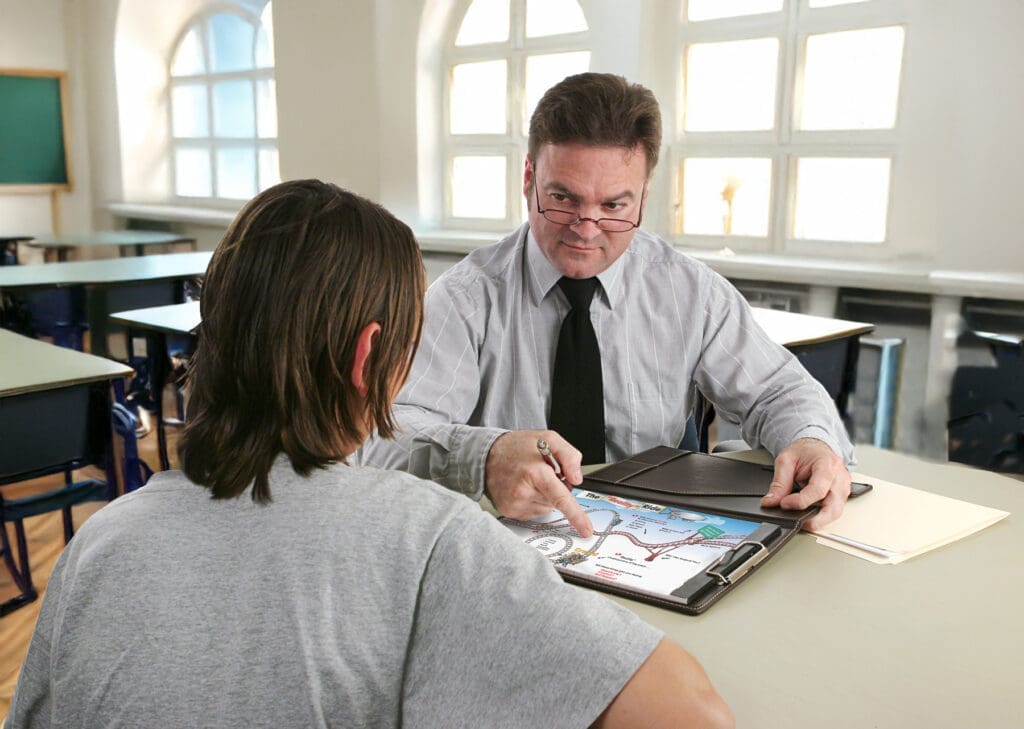
Each intervention is designed to give you a practical approach to building trust, establishing a positive relationship with the student that motivates them and helps them to be more resilient in the face of adversity.
Start Where the Student Is
A productive intervention often moves through three simple needs:
Regulate
Help me get back in control.
Relate
Help me know that you are with me, not against me.
Reason
Help me think through what is happening and what I can do next.
Note:
You don’t always have to follow those steps in order. The goal is to have a small repertoire of tools you can draw from depending on the student, the situation, and the amount of time you have.
5 Quick Interventions
Quick Intervention 1
De-escalate the Moment
When a student is emotionally overwhelmed, frustrated, angry, anxious, or shut down, reasoning usually isn’t the first step.
This strategy provides a simple way to help lower the intensity of the moment and create enough emotional space for the student to regain control.
Use this when a student:
- Is visibly frustrated or upset
- Is having difficulty calming down
- Has shut down or stopped communicating
- Is reacting emotionally to a conflict or consequence
- Needs help getting grounded before talking about what happened
Goal:
Help the student regulate first so that a productive conversation can become possible.
Quick Intervention 2
Help the Student Reset
Not every student needs a long conversation. Sometimes they simply need a quick, concrete way to interrupt the emotional cycle they are stuck in.
This de-escalation strategy gives the student something simple and manageable to focus on in the moment so they can move from reacting toward responding.
Use this when a student:
- Keeps replaying a frustrating event
- Is escalating during the conversation
- Seems overwhelmed by too many thoughts or emotions
- Needs a quick reset before returning to class
- Is struggling to identify what to do next
Goal:
Create a brief reset that helps the student feel more capable of taking the next step.
Quick Intervention 3
Build Connection Before Correction
Students are much more likely to listen, reflect, and accept support when they feel respected rather than managed.
This relationship-building strategy comes from WhyTry’s Surrendering the One-Up approach and is designed to reduce the power struggle that can develop when an adult feels responsible for fixing a student’s behavior.
Instead of beginning with correction, consequences, or advice, begin by creating connection.
Use this when a student:
- Is defensive with adults
- Feels misunderstood or judged
- Gives short answers or refuses to engage
- Has experienced repeated discipline or correction
- Seems to expect another lecture
Goal:
Help the student experience you as a partner rather than another adult trying to control the situation.
Quick Intervention 4
Help the Student Feel Heard
One of the quickest ways to strengthen a one-on-one intervention is to communicate:
“I want to understand this from your point of view.”
This relationship strategy helps you slow the conversation down, become curious about the student’s experience, and create room for the student to tell you what is really happening.
That doesn’t mean agreeing with every decision the student has made. It means understanding before trying to influence what happens next.
Use this when a student:
- Says, “You don’t understand”
- Blames teachers, parents, peers, or circumstances
- Feels that nobody listens to them
- Is reluctant to accept help
- Needs connection before they are ready to problem-solve
Goal:
Increase trust, reduce defensiveness, and create a stronger foundation for meaningful problem-solving.
Quick Intervention 5
Decisions & Consequences: The Reality Ride
Sometimes the most important thing we can help a student do is step back and see where their current choices are taking them.
The Reality Ride is one of WhyTry’s core visual metaphors. It helps students explore the connection between:
Choices → Consequences → Future Outcomes

Rather than lecturing a student about what they “should” do, the Reality Ride gives you a structured way to help the student examine their own situation, identify patterns, and decide what they want to do next.
This is a more complete quick intervention that can be used when you have additional time with a student or when you want to continue the conversation across multiple meetings.
You Don’t Need to Use All Five
These strategies are meant to be flexible. A student who walks into your office angry may simply need Intervention 1.
Another student may need a few minutes of relationship-building before they are willing to tell you what is really going on.
And sometimes a brief conversation naturally opens the door to a deeper discussion about choices, consequences, motivation, attendance, relationships, or the future.
The goal isn’t to complete a sequence. The goal is to have the right tool available when the student needs it.
A Preview of the WhyTry Quick Intervention Toolkit
These five resources are just a small sample of what we are building for school counselors, school psychologists, social workers, administrators, interventionists, and other professionals who work individually with students.
The WhyTry Quick Intervention Toolkit is being designed to make it easier to find and use practical interventions for some of the most common challenges students bring into one-on-one settings, including:
- Motivation and disengagement
- Chronic absenteeism and school avoidance
- Behavior and conflict
- Emotional regulation and de-escalation
- Decision-making and consequences
- Relationships and social skills
- Academic challenges
- Confidence, resilience, and hope for the future

Instead of searching through a large curriculum when you only have 10 or 15 minutes with a student, the toolkit will help you quickly identify a challenge, choose an intervention, and access the resources you need.
Want to See More? Join Our Free Webinar – New WhyTry Quick Intervention Toolkit
We’ll be hosting a free webinar specifically for school counselors and other professionals who provide one-on-one student support.
We’ll walk through the new Quick Intervention Toolkit, demonstrate several of the strategies, and show you how the tools can be used in real counseling situations.
You’ll also get access to additional free resources you can begin using with students right away.
Thursday October 15th
12:00-1:00 pm Pacific | 1:00 MT | 2:00 CT | 3:00 ET