

First Five: Student Connection Strategies for Classes and Groups
Five strategies to use for the first five minutes of a class or group that help students feel seen, supported, connected, engaged, and ready to grow.
Five minutes can make a difference.
Free downloadable resources for alternative educators, counselors, social workers, administrators, and anyone working directly with students who may be difficult to reach.
5 min – 5 activities
Students in diverse education settings often bring a wide range of experiences, challenges, strengths, and reasons for becoming disconnected from school.
For many students, engagement begins with something more basic than academics:
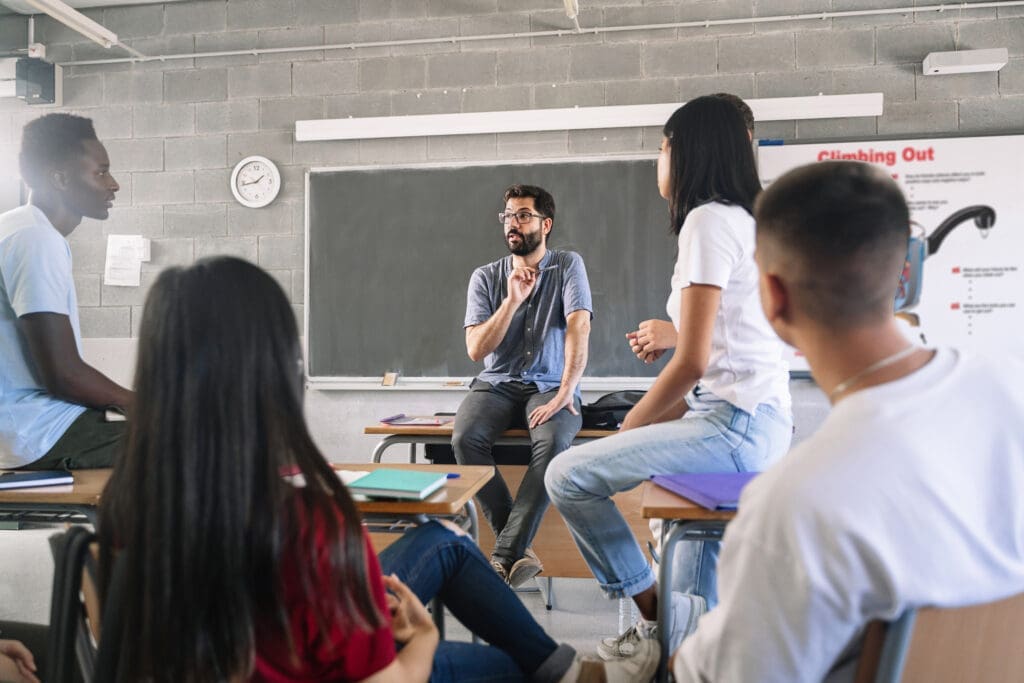
Each strategy is designed to provide a quick, practical way to strengthen connection, engagement, and resilience at the beginning of a class or group.
The Student’s Experience
Notice
Connect
Strenghten
Discover Why
Envision
The Educator’s Focus
Recognition > Connection > Growth > Relevance > Vision
Quick Summary of the First Five
STRATEGY 1 – NOTICE
Name Check
Students get on their feet and move around the room while music plays. When the music stops, they quickly connect with someone nearby, exchange names, and help the educator begin learning and remembering names too.
The activity is fast, spontaneous, and low-pressure, while communicating something important to students:
Foundational message: You matter here.
Why it matters:
For students who may have experienced disconnection, rejection, frequent transitions, or negative school experiences, simply feeling known by an adult can be an important first step toward trust and engagement.
STRATEGY 2 — CONNECT
Pick, Move, Connect
Students choose between four light, visual options and move to a designated area of the room based on their choice. Once there, they make several quick, low-pressure connections with classmates who made the same choice.
The activity helps students discover common ground without requiring anyone to share something deeply personal or participate in a long conversation.
Foundational message: We’re better when we connect.
Why it matters:
Students who feel isolated or disconnected are less likely to engage. Small, positive peer interactions can help reduce social distance, build belonging, and make the classroom feel safer and more welcoming.
STRATEGY 3 — STRENGTHEN
Pair Up & Build
Students complete a quick, silent movement challenge that naturally puts them into pairs without having to choose a partner.
Pairs then have a brief conversation about one strength they already have and one strength they would like to continue developing.
The activity shifts attention away from deficits and helps students recognize that they already have something positive to build from.
Foundational message: You have strengths you can build on.
Why it matters:
Many students have spent a great deal of time hearing about what they are doing wrong, what they are behind in, or what they need to fix. Recognizing existing strengths can provide an important starting point for confidence, growth, and resilience.
STRATEGY 4 — DISCOVER THE WHY
Work It Back
Students physically move through four stations to build a simple chain from a future choice to an opportunity, then to a skill, and finally to something they do in school that helps them practice that skill.
The experience helps students make the connection between what they are doing today and the choices they may have in the future.
Foundational message: What you do here can matter to your future.
Why it matters:
When students cannot see the relevance of school, motivation can disappear quickly. Helping students connect today’s effort to future opportunities can give school a stronger sense of purpose and help answer the question: “Why should I try?”
STRATEGY 5 — ENVISION
Future Corners
Students move to one of four areas of the room based on an aspect of their future they would like to think about:
Who I Want to Be
What I Want to Be Able to Do
What I Want My Life to Include
How I Want to Make a Difference
After a brief guided reflection, students identify one direction that matters to them and one small step they could begin taking now.
Foundational message: Your future is worth thinking about.
Why it matters in alternative education:
Students do not need to have their future figured out. But helping them imagine possibilities can strengthen hope, purpose, and the belief that their present circumstances do not have to define what comes next.